16 May 2026
Is the Internet Becoming What TV Already Was?
TLDR: yes and no..
Something shifted when a stranger stopped me on the street and asked for a photo.
Not because of the photo itself. I’m not a celebrity. I’m not trying to be an influencer. I started posting because I had ideas I wanted to share with a specific type of person, someone who wouldn’t normally sit through a finance or career video, but who would stop scrolling if I wrapped the same ideas in something that hit them emotionally. I know how to do that and it seems to work. The platform was just the distribution, never the goal.
And at 100,000 followers, something else becomes visible. Something the big accounts never talk about publicly.
Parasocial relationships are exhausting.
Someone sits down and writes you a long, thoughtful message about an idea you shared. How do you ignore that? And then 20 people do that same day. And then you open a DM and don’t reply, and the person on the other side watches the read receipt appear and takes it personally. At 100K this is already a lot to carry. At 1 million it becomes a full-time psychological management problem. At 10 million it becomes structurally impossible to handle as a human being.
So you build systems. You hire people to manage DMs, handle edits, coordinate uploads. None of this is inherently wrong. Casey Neistat has a team. Production quality going up does not mean the soul of the content has to go out. The real problem is more subtle, and it starts with a much simpler question: what metric are you optimizing for?
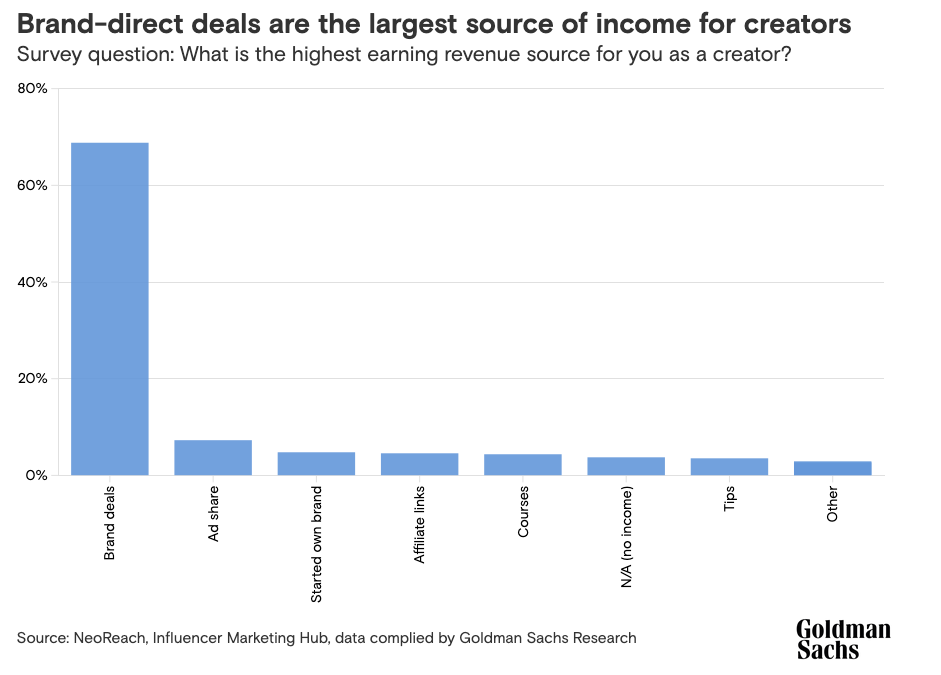
You start posting what you genuinely care about. Something blows up. You post something similar. It blows up again. The pattern is now in your head. Then the first brand deal arrives, maybe 1,500 euros, maybe 3,000, and something clicks: this can be a revenue stream. The math is simple from that point forward. Stay in the niche that performs. Double down. Post more frequently. Increase the surface area for monetization. And if you ever try to post something different, the algorithm punishes you for leaving the box it built around you. Your recommendation profile gets confused. Reach drops. Engagement falls. You learn not to do that again.
This is not an accident. This is the optimization working exactly as designed. Platforms are built to maximize time on platform, not to reward creative range. The algorithm needs to categorize you so it can suggest you to the right audience segment. It rewards predictability. It taxes novelty.
And at scale, this exact process is indistinguishable from what television production companies figured out decades ago.
The parallel to TV is more precise than most people realize.
In the 1980s and 1990s, network television operated on a simple logic: limited prime-time slots, high production costs, need for predictable returns. The shows that survived were not the most creative ones. They were the ones with proven formats, replicable across seasons, easy to pitch in one sentence. The sitcom became the dominant form not because audiences were unsophisticated but because the economics of the medium selected for it. You didn’t greenlight a weird experimental drama when a proven format delivered consistent ratings.
Someone in that system probably had a great idea for something new. And someone in a meeting asked: how many viewers? What’s the ROI? You don’t know? Then it’s a no.
Now look at the biggest YouTube channels something like Squeezie in France. The same logic has arrived. Once you have a team, a production budget, a marketing agency, and a manager taking a percentage, you are a small media company and you make decisions the way small media companies make decisions. You analyse what worked. You reproduce it in different flavours. You don’t risk your production costs on something unproven when episode 50 of the same format still delivers numbers. That’s how you end up with episode 985 of ‘Qui est l’imposteur ?’. Or someone like Simo Sedrati trying to import concepts with already proven ROI. This is not a criticism. It is a rational response to the incentive structure. But it is worth naming clearly.
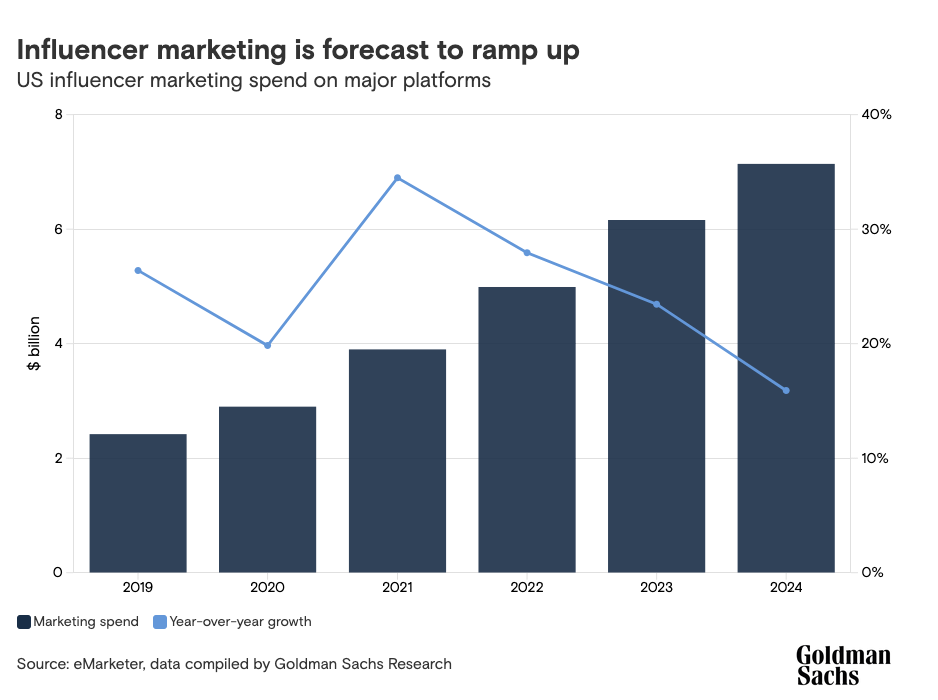
The creator economy is now worth around 250 billion dollars according to Goldman Sachs, projected to reach 480 billion by 2027. At that size, it was inevitable that it would attract the same optimisation logic that governs any mature media industry. The money followed the attention. The systems followed the money.
The good news is that the internet is not television.
Television had physical scarcity. A limited number of channels, a limited number of broadcast hours, and an enormous cost just to be in the room. If you didn’t have a production deal, you didn’t exist. The internet has none of those constraints. Everything can coexist. The 50 million dollar production and the random Zeta guy filming himself in his car begging you to invest for 12 minutes can live on the same platform, serve different audiences, and both find their people.
PewDiePie understood this before almost anyone else at scale. At his peak the most subscribed individual creator on Youtube, he was offered enough money and partnership deals to industrialise his output completely. He mostly refused. He kept posting what he wanted, when he wanted, and built something that felt like a person rather than a format. Casey Neistat did the same thing for over a decade, turning his own life and perspective into a body of work with actual texture and identity. Both of them have teams. Neither of them ever became a format.
The primary metric they were optimising for was not the metric the machine wanted them to use.
That is the entire distinction. Not whether you have a production budget. Not whether you work with brands. Whether, when you sit down to decide what to post next, the first question in your head is what will perform or what do I actually want to say.
Here is what I think happens next.
The data is already pointing in a direction most big creators would rather not look at. Micro creators, accounts in the 5,000 to 100,000 follower range, consistently outperform larger accounts on engagement. On Instagram, nano influencers average around 6% engagement. Mega influencers with over a million followers average closer to 1% (according to Influencer Marketing Hub's 2024 study). The trust gap between a person who feels real and a channel that feels produced is measurable, and it is widening.
I think in the next ten years a significant share of total watch time migrates toward smaller creators, people sharing their actual lives and actual views, with the rougher edges left in. The raw facetime, the unedited storytime, the slightly blurry talking-head video: these are already going viral in ways that polished content is not, because audiences have developed a very sensitive detector for when something is designed to perform versus when it is genuinely being shared.
And then there is AI. If your content strategy is already built on repeating a proven concept in slightly different packaging at high cadence, for instance reading an AI generated script, you have basically described what a language model does naturally. The engagement numbers that AI generated slop (e.g SKIBIDI TENTA FRUIT in France) is accumulating are not a coincidence. If the only goal is to feed the algorithm, AI will do it better, faster, and cheaper than any human team. The creators who optimised for the machine have essentially been training their replacement.
So where does this leave the rest of us?
I am not going to pretend I have this fully figured out. I use hooks. I think about format. I am aware that shorter content reaches more people and I use that. But I have made one decision that I think matters more than any of the tactical ones: this will not be my primary source of income, and it will not become my main occupation. The moment it does, the function I am optimising for changes, and everything downstream of that changes with it.
Use the platform as a tool. Build something real elsewhere, a career, a business, a skill set that generates income independently. Then post from that position of freedom. What you share will be different. The people who feel it will be able to tell.
The internet is not doomed to become television. But some corners of it already have, and those corners are getting louder. The answer is not to disengage. It is to stay clear about what you are actually trying to do.
Start posting. Don’t make it your job.
Z
This article is entirely human-written. AI was used to fact-check details and proofread.